

Modern workplace environments are overwhelmingly sedentary. Whether working in a corporate office, managing a home workstation, or spending long hours behind the wheel, millions of professionals find themselves locked into seated postures for eight to twelve hours a day. While mental productivity may remain high throughout a demanding shift, physical immobility takes a substantial toll on human physiology.
Prolonged physical inactivity contributes to postural breakdown, musculoskeletal pain, metabolic slowdown, reduced cardiovascular efficiency, and persistent mental fatigue. Many professionals attempt to counteract a sedentary workday by cramming a single intense workout into the evening. While dedicated exercise is valuable, a sixty-minute workout cannot completely undo ten hours of continuous stillness. The most sustainable solution is integrating practical, low-friction fitness strategies directly into the rhythm of your workday.
Understanding the Physiology of Sedentary Fatigue
To appreciate why movement throughout the day matters, it is useful to look at what happens inside the body during prolonged sitting.
- Suppression of Lipoprotein Lipase: When large skeletal muscles, particularly the quadriceps and glutes, remain inactive for hours, the production of lipoprotein lipase drops dramatically. This enzyme is essential for clearing fats from the bloodstream and regulating blood glucose levels.
- Fascial and Muscular Shortening: Continuous sitting keeps hip flexors, hamstrings, and pectoral muscles in a chronically shortened state. Over time, this leads to anterior pelvic tilt, rounded shoulders, neck stiffness, and lower back strain.
- Venous and Lymphatic Stagnation: The human circulatory and lymphatic systems rely heavily on the muscular contractions of the legs, known as the skeletal muscle pump, to return blood and lymph upward toward the heart. Long periods of sitting cause fluid pooling in the lower extremities, contributing to heavy legs and sluggish circulation.
- Reduced Cerebral Oxygenation: Static postures shallow your breathing patterns and slow peripheral blood flow, diminishing oxygen delivery to the brain and triggering the familiar mid-afternoon cognitive slump.
The Power of Non-Exercise Activity Thermogenesis
When designing a sustainable workplace movement plan, the most effective concept to understand is Non-Exercise Activity Thermogenesis, commonly known as NEAT. This includes all the energy expended through daily movement that is not formal athletic exercise or sleeping, such as walking, standing, adjusting posture, and taking stairs.
NEAT accounts for a substantially larger portion of daily caloric expenditure than a standard forty-five-minute gym session. Elevating your baseline NEAT during working hours protects metabolic flexibility, regulates insulin sensitivity, and prevents joint stiffness without requiring athletic gear or dedicated workout facilities.
Ergonomic Adjustments and Dynamic Workstations
Modifying your physical workspace creates natural opportunities for movement throughout the day without interrupting your professional workflow.
Sit-Stand Transitions
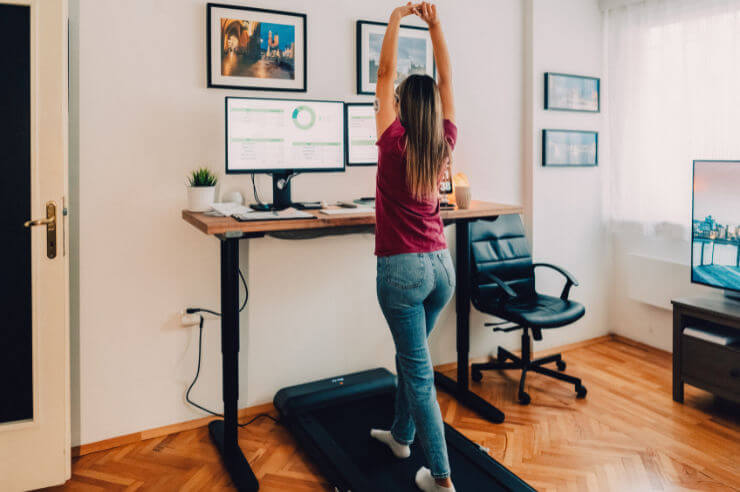
Using a motorized or manual sit-stand desk is one of the most straightforward ways to break up static postures.
- Avoid Continuous Standing: Standing rigidly in one spot for six hours creates its own set of problems, including foot fatigue and lumbar compression. The goal is postural variation.
- The 30-Minute Movement Ratio: Aim for a cycle of sitting for thirty to forty-five minutes, followed by standing for fifteen to twenty minutes. This alternating rhythm keeps leg musculature active and prevents soft tissue fatigue.
- Weight Shifting and Balance Boards: While standing, utilize an anti-fatigue mat, a small wooden footrest, or a balance board to encourage subtle, subconscious weight shifts from one leg to the other.
Under-Desk Movement Devices
For environments where standing is impractical, under-desk tools provide continuous low-level movement while you answer emails or participate in virtual calls.
- Under-Desk Walking Pads: Compact, flat treadmills slide directly beneath standing desks, allowing you to walk at a slow, comfortable pace of one to one and a half miles per hour during non-typing tasks.
- Seated Ellipticals and Pedal Exercisers: Small pedal units positioned under standard desks keep the lower limbs moving, stimulating venous return and burning modest energy while you review documents.
Movement Snacks and Micro-Workouts
A powerful way to maintain physical vitality during long shifts is through movement snacks. These are short bursts of physical activity lasting from thirty seconds to two minutes, performed multiple times across the day.
Lower Body Reactivation Drills
The large muscle groups of the legs and hips bear the brunt of sitting and require regular activation.
- Desk Chair Squats: Stand up from your chair, hinge your hips back, lightly tap your glutes to the edge of the seat, and drive firmly through your heels to return to standing. Perform ten to fifteen controlled repetitions to activate the glutes, quadriceps, and hamstrings.
- Standing Calf Raises: While waiting for documents to print or a kettle to boil, stand on the edge of a step or flat on the floor and perform twenty slow calf raises. This activates the calf muscle pump, forcing pooled blood back into systemic circulation.
- Standing Glute Squeezes and Hip Extensions: Stand upright behind your chair, place your hands on the backrest, and extend one leg straight back behind you, squeezing the glute at the peak for two seconds. Alternate legs for ten repetitions per side to counteract tight hip flexors.
Upper Body and Postural Reset Drills
Combatting the forward-head posture and rounded shoulders caused by computer monitors requires opening the chest and activating the upper back.
- Doorway Chest Openers: Stand in a doorway, place your forearms on the door frame with elbows bent at ninety degrees, and take a gentle step forward until you feel an expansive stretch across your pectoral muscles. Hold for thirty seconds while taking deep breaths.
- Wall Angels: Stand with your back, head, and heels flat against a clear wall. Raise your arms into a goalpost position, keeping your elbows and wrists in contact with the wall, and slide your arms upward overhead. Perform ten smooth repetitions to strengthen the middle and lower trapezius muscles.
- Desk-Edge Push-Ups: Place your hands shoulder-width apart on the edge of a sturdy desk, step your feet back into an inclined plank position, and perform ten to twelve controlled push-ups. This engages the core, triceps, and chest without requiring you to get onto the floor.
Integrating Activity into Daily Professional Habits
The most successful workplace fitness strategies are those tied directly to existing business habits, removing the need to remember to exercise.
- Walk-and-Talk Phone Calls: Make it a non-negotiable rule that any audio-only phone conversation is conducted while pacing your office, walking hallway corridors, or circling an outdoor block.
- Walking One-on-One Meetings: For internal check-ins involving two or three people, replace the traditional conference room setting with a walking meeting outside. Walking alongside colleagues fosters creative problem-solving and reduces conversational tension.
- Strategic Hydration Placement: Keep a modest water glass at your desk rather than a giant jug. Needing to refill your glass every hour forces you to stand, walk to the water cooler, and use the restroom, naturally building four to six short walking intervals into your day.
- Stairway Defaults: Bypass elevators and escalators for any journey under four floors. Taking the stairs provides an immediate spike in cardiovascular output and engages the posterior chain.
Designing a Daily Movement Blueprint
Structuring your workday around predictable physical checkpoints ensures consistency even during high-pressure weeks.
- Morning Commute or Pre-Shift Activation: If commuting via public transit, exit one stop early and walk the remaining distance. If working from home, spend five minutes performing gentle joint rotations for the neck, hips, and ankles before opening your laptop.
- Mid-Morning Movement Break: Set a recurring silent calendar reminder at 10:30 AM to stand up, complete twelve chair squats, and perform a thirty-second doorway chest stretch.
- Active Lunch Intermission: Dedicate the first ten to fifteen minutes of your lunch break to an brisk outdoor walk before eating your meal. This supports glucose disposal and resets mental focus for the afternoon.
- Mid-Afternoon Reset: At 3:00 PM, when energy naturally wanes, perform twenty desk push-ups, execute ten wall angels, and drink a large glass of water instead of reaching for a sugary snack.
- Post-Shift Decompression: Close out the workday with two minutes of gentle spinal mobility, such as cat-cow stretches or standing side reaches, signaling to your brain and body that the sedentary work phase is complete.
Frequently Asked Questions
Can walking on an under-desk treadmill while working decrease typing accuracy and productivity?
Typing precision and deep concentration can drop slightly during the initial learning curve, especially if the treadmill speed is set too high. To maintain high output, keep the speed between one and one point two miles per hour, and reserve walking periods for tasks like reviewing documents, reading emails, attending passive webinar sessions, or taking phone calls, while sitting down for tasks requiring intense focus or complex data entry.
How many total daily steps should an office worker aim for during an eight-hour shift?
While ten thousand steps is a common general target, a realistic and highly beneficial goal for an office worker is accumulating four thousand to six thousand steps purely during working hours. Achieving this baseline through walking phone calls, lunch strolls, and frequent micro-breaks ensures you avoid prolonged stagnation, leaving the remaining steps to be easily gathered before and after work.
What is the most effective way to prevent lower back stiffness when sitting for long hours?
Lower back stiffness is primarily caused by posterior pelvic tilting and inactive core musculature. To prevent it, adjust your chair height so your hips sit slightly higher than your knees, place a small lumbar support cushion behind the natural curve of your lower spine, keep both feet flat on the floor, and stand up to extend your hips backward for thirty seconds every forty-five minutes.
Does fidgeting or tapping your feet at a desk really burn meaningful calories?
Yes. Clinical studies on human metabolism demonstrate that frequent spontaneous movements, such as tapping feet, shifting positions, crossing and uncrossing legs, and stretching arms, can increase daily energy expenditure by several hundred calories compared to sitting completely motionless. These micro-movements also stimulate blood flow and prevent joint capsule rigidity.
How can professionals dressed in formal business attire stay active without sweating or damaging clothing?
Focus on low-velocity, controlled mobility drills and moderate walking rather than high-intensity cardiovascular bursts. Exercises like slow chair squats, gentle chest openers, calf raises, seated spinal twists, and ankle circles require minimal space, do not wrinkle formal fabrics, and elevate circulation without raising core body temperature enough to cause perspiration.
What should a professional do if corporate office culture frowns upon standing or moving during meetings?
Start with subtle, socially discreet micro-movements that do not draw attention. Engage your core while seated, perform discreet isometric glute contractions, roll your shoulders backward periodically, and flex your calves and ankles under the table. You can also advocate for cultural change by suggesting walking meetings for casual one-on-one check-ins or discussing the productivity benefits of dynamic workspaces with human resources.
Is it safe to perform light stretching and bodyweight exercises if you already have existing joint pain?
Light, controlled mobility exercises and gentle range-of-motion movements are generally safe and often therapeutic for chronic joint stiffness caused by immobility. However, you should always avoid moving into sharp or pinching pain, refrain from forceful ballistic stretching, and consult a physical therapist or sports medicine specialist to design a customized movement protocol tailored to your specific musculoskeletal condition.